TRE and Nervous System Regulation
We have disconnected…

From our culture, to our home life and upbringing, to our classrooms, to our workplace, many of us have learned and been conditioned to disconnect. We have been conditioned that shaking should be stopped. It is unmanly to cry. It is unhealthy to have and feel any kind of aggression. Pushing through and suppressing is better than stopping to rest and catch our breath. That achieving what we don’t have is more valuable than slowing down to appreciate the good things that are already around us. We have stopped listening to our needs. Our needs for shaking, for crying, for movement, for vocalizing our hurts. Our need of sharing our story and being fully heard. For expressing our anger in a healthy way. For being with and feeling and letting someone else know the full spectrum of what is or what is not happening inside of us and around us. In my opinion we are getting further and further away from what we all need. Further away from what it means to be human.
I believe that our bodies are amazingly designed to come back into balance, and that our natural state is one of aliveness, health, and vitality. There are just so many obstacles put in our way today across every level of our lives. We are lacking what we really need to benefit ourselves, and we have excessive amounts of what harms us.
Let’s start to reconnect…
TRE
Talk therapies and cognitive therapies can be valuable to some individuals, but they have their limitations. Since chronic stress and trauma are stored in our body and nervous system, we need to go inward.
TRE is one tool that can help us to reconnect back with our body again and it’s natural ability to release tension. TRE has been used for healing both large-scale and small-scale traumas all around the world. It has also been used as part of a regular, self-care routine, and to shake off day-to-day stresses and tensions.
What is TRE?
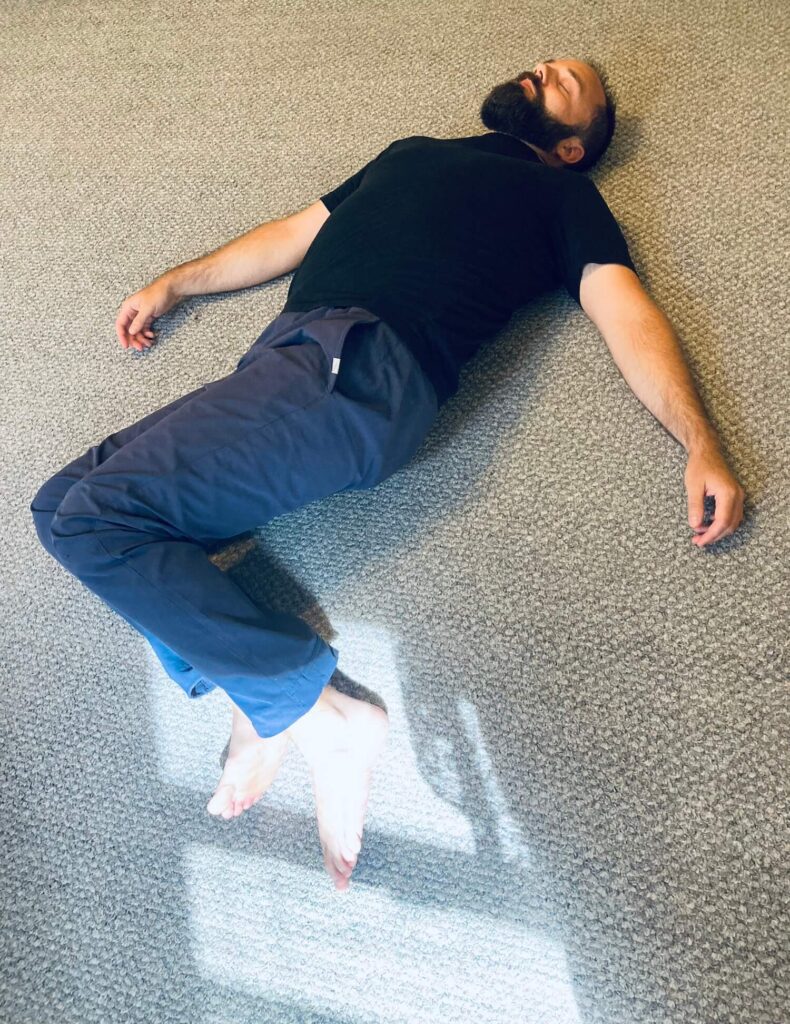
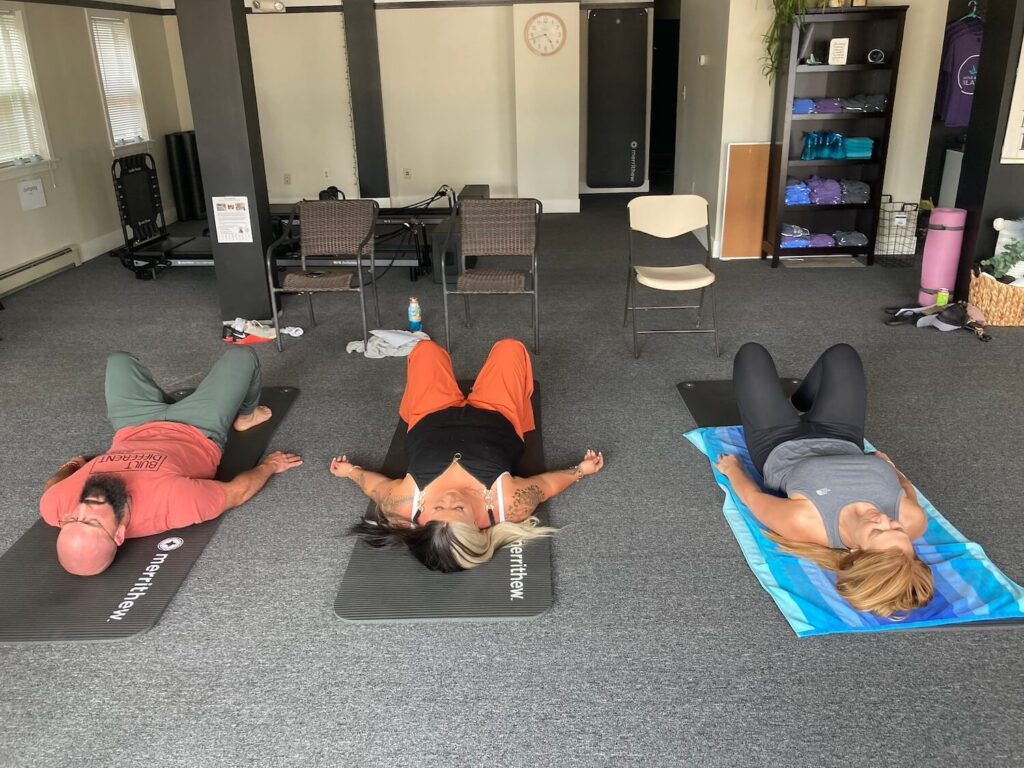
It is an easy-to-learn DIY relaxation method. The first part, for most individuals, consists of a few simple warm-up exercises primarily of the legs and back. Then,for the second part, we go to the floor to tune in to the natural vibrations and shaking that is produced in the body. The key is allowing this tremoring while we are at rest. The body will intelligently move, unwind, and soften whatever tension patterns and stresses are stored within its muscles and fascia. The tremor can move throughout any part of the body, not just the legs. All of the exercises can be modified or even omitted if necessary in case of previous injuries, mobility concerns, hypersensitivities or chronic illness difficulties such as fatigue.
An added bonus about TRE is that it is primarily a passive process. You do not have to think a certain thing or go through a complex process of remembering or reprocessing events and memories. For those of us with chronic illness who have practiced brain retraining and somatics, we know that these can often involve a complicated process. The certain way we may be encouraged to do visualizations, vagal toning, breath patterns, and movements, can be helpful but also overwhelming and tiring, especially if we are already low in energy and mental focus. With TRE, after a few sessions, often all that is necessary is to simply lay on the floor and allow the tremor to start, and let it go wherever it needs to go and do whatever it needs to do.
Some ways our bodies release tension
- Shaking, movements, twitches, tremoring
- Yawning
- Sighing
- Burping
- Crying
- Laughing
- Angering
- Myofascial unwinding
With TRE, we learn to befriend and welcome these varied forms of release, both during the session and outside of the session.
What effects have been noted during and after TRE?
- More grounded and connected to body
- Reduction of panic attacks
- Better mood
- Feeling calmer
- Feeling Lighter
- Feeling more alive
- Deeper dreams and dream recall
- Feeling relaxed
- Pain reduction from stress and illness
- Reduction of fatigue and fatigue from Chronic Fatigue Syndrome
- Feeling safer in the body and more comfortable with feeling emotions
- Unwinding and healing of past traumas, even from decades in the past
- Improved capacity to handle day-to-day stresses
- Improved relationships and less conflicts
- Clearer thinking
- Greater emotional range
- Pain and Injury Recovery
- Improvement of PTSD symptoms
- Improvement of CPTSD symptoms
- Less worries and fears
What does a TRE Class look like and what is included?
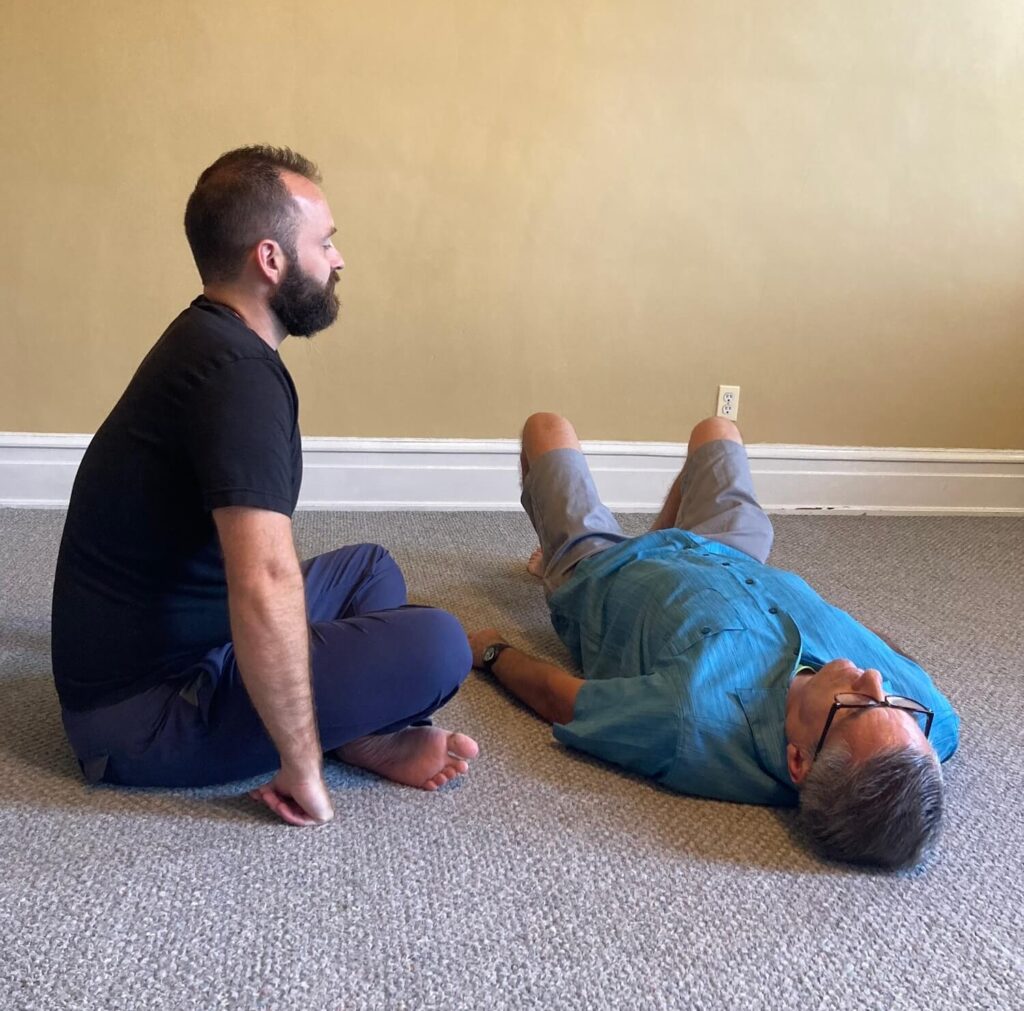
- Professional Guidance to help lead you through the TRE practice in a pace and way that is safe for you.
- A copy of class notes and any educational materials used in class
- Access to my TRE videos to help lead you through the exercises and some breath and movement videos
A brief overview of the typical TRE process can be found here.
TRE CLASSES
Learning to ride the waves of the nervous system…
TRE Individual Session
TRE Group Sessions
Nervous System Regulation Only- Session
If you are chronically ill or on the sensitive side, I recommend you start here or with a very short duration of TRE
We can think of our nervous systems being flexible and fluid parts of us. From being still and resting and digesting, to being socially engaged and connected and growing and repairing the body, to playing, creating, and being active and stimulated, our nervous system states are crucial to all of that.
In a state of overall balance, our nervous system can move easily and to the proper degrees throughout different states throughout the day, depending on our needs and our internal and external environment. In simple terms, we can think of someone who generally feels safe and secure and connected as having a healthier and more regulated nervous system.
In a state of disease and feeling unwell, our nervous system does not move fluidly and tends to over or under-react to stimuli. Someone who generally feels unsafe, overwhelmed, insecure, and traumatized has more dysregulation of his or her nervous system.
Living in our modern, toxin and stress and trauma-filled world makes it easy for us to be living in a mild to severe state of nervous system dysregulation. In my view, and the view of many, we believe that chronic illness syndromes such as CFS, MCS, MCAS, Fibromyalgia, Food Sensitivities, etc, are also strongly rooted in the health and regulation of the nervous system. That’s why bringing awareness and attention to improving our nervous system health is so vital.
If you would like to build your own toolbox with a variety of nervous system regulation and brain retraining tools and resources, including TRE, and have a space to practice them together in a way that works best for you, you can contact me or book a discovery call. I can cover:
- Vagal Toning
- Visualizations
- Breath patterns
- Orienting
- Self-Touch
- Functional Neurology Eye Exercises
- Somatic Movement
- Kidney/Adrenal/Brainstem Focusing
- And more

Neurogenic Tremoring and Nervous System tools versus embodied processing
It is difficult to put into words the differences I’ve experienced between somatic modalities. I could make some generalities that are often true below.
Tools such as neurogenic tremoring (TRE), vagal toning techniques, orienting, etc, are geared especially toward REGULATING our nervous system. These are very helpful to create that foundation of safety in the body, a sense of groundedness and presentness. These tools also help us to become more EMBODIED and connected to our INTUITION. We start to focus and listen more to the body. What impulses, sensations, and emotions are occurring, and what message these are guiding us towards.
Neurogenic tremoring also has many other benefits. I will not list them all here, but it helps the body to regulate by being a great way to DISCHARGE and RELEASE tension patterns and trauma, especially shock trauma, and over time bring opening and support for complex trauma as well. However, we don’t generally focus specifically on processing the trauma in the TRE process. The body might process some or all of the traumatic imprints on its own through the shaking and movements, or it might not. It can be hard to tell sometimes.
I would say that neurogenic tremoring leans primarily toward focusing on the sensations of the client, with sometimes emotional content and impulse content. With EP, we are considering primarily the sensations and emotions, with a bit less focus on thoughts and impulses. EP can be a space to provide relational repair work as well.
Embodied Processing (EP) focuses on both REGULATION and PROCESSING.
Whereas, with neurogenic tremoring and regulation tools we can more BROADLY help the body, with EP, we can focus on SPECIFIC triggers or memories, explore them in detail, and have the language to navigate them.
In my view, the practitioner using neurogenic tremoring can feel like he is guiding the client into his body and nervous system, but with some distance there.
- “I’m here observing you, but you go on and explore and let me know what you find.”
With EP, as a practitioner, I get the feeling that there is less distance between the client and me. It feels more intimate.
- “Let me come with you and we will both explore the landscape together.”
- Tremoring and nervous system tools can be thought of as a BROADER way to regulate the nervous system, build nervous system and emotional capacity, increase embodiment and intuition, and discharge and work through fight/flight/freeze energy.
- Embodied Processing can be thought of as a more SPECIFIC way to explore memories, triggers, and life patterns or challenges, and find the origins of these. EP can work more deeply with the subconscious mind and its “parts”. EP can be effective for relational repair work between client and practitioner, whereas TRE is not really geared that way.
- Tremoring/nervous system tools and Embodied Processing can support each other.
Tremoring and NS Tools Goals:
- Embodiment
- Regulation
- Discharge, Release (Tremoring)
- Increased Intuition
- Opening up the “movement” channel of the body
EP Goals:
- Embodiment
- Regulation
- Discharge and Release
- Processing
- Increased intuition
- Opening up “emotional” channels of the body
Tremoring and NS Tools Focus:
- Primarily the body
- Tremoring works with the fascia
- Primarily nervous system and sensations
- Broader focus
- Less specific work with imagery and subconscious
EP Focus:
- Both the body and the mind
- Nervous system, sensations, emotions, relational field
- Can be broad and specific focus
- More specific work with imagery and subconscious
Tremoring and NS Tools Distance:
- May feel like a greater distance between client and practitioner, especially when online.
EP Distance:
- May feel more intimate and vulnerable.
Tremoring and NS Tools Trauma Support:
- Shock Trauma
- Complex Trauma over time
EP Trauma Support:
- Shock Trauma
- Complex Trauma over time-may be more helpful
Frequently Asked Questions
Contact me with your interest at evan@mountainandmeadowhealth.com to see about a reduced rate.
You can visit treglobal.org
Please DO NOT sign up if you are pregnant or there is a chance that you could be pregnant.
Physical Limitations:
If you have any of the following:
- Irregular Blood Pressure (High or Low)
- Irregular Heart Conditions(surgery, pace makers, arrhythmia)
- Physical Limitations(broken bones, strains, sprains, operations still under a physician’s care)
- Hypo or Hyperglycemia (medications)
- Epilepsy
We MAY be able to work together with your physician’s approval.
Psychiatric Conditions:
If you have been diagnosed with any of the following conditions:
- Severe PTSD
- C-PTSD
- Manic/depressive
- Bi-polar conditions
- Schizophrenia
- Severe Depression
- Psychosis
- Borderline
- Dissociative Disorders
- Concussion
- Head or Brain Injuries
We MAY be able to work together with your psychiatrist’s or doctor’s approval.
Please get in touch with me if you are not sure.
What if I am sensitive/hypersensitive, or have a chronic illness such as CFS, POTS, MCAS, Lyme, etc?
TRE can be helpful for all of these conditions. We MAY be able to work together. If we do, then we do not do as many exercises, and the duration of actual tremoring is reduced quite a lot initially with more rest built in. Also the pacing of increasing our tremoring is often done more gradually.
With an average person, without chronic illness or a sensitive nervous system, he or she may be able to tremor up to 15 minutes and be fine with that at the beginning, and extend the time of tremoring after a month or two. However, with a sensitive nervous system or chronic illness, a person may only be able to tremor for 20 seconds to a few minutes per session, and gradually extend the tremoring over the upcoming months and years if tolerated.
Please get in touch with me if you are not sure.
Check in with your body and ask yourself “What appeals to me the most?” A very important factor that helps us to heal is being in a place and environment where we feel safe. Does a private session or group sound like it would provide more safety for you?
If you have a trauma history, chronic illness, are sensitive or hypersensitive, are currently experiencing a high amount of stress or anxiety, or know that you have a dysregulated nervous system, then I highly recommend you have at least one private session first.
Please get in touch with me if you are not sure.
No. All of us were designed with the natural ability to shake and tremble in order to release stress, trauma, and tension, and rebalance our nervous system.
The tremors require no conscious effort. They get straight to the nervous system.
TRE is not a form of fitness. The exercises are simply a means to help activate your tremor reflex mechanism and once that has happened, the point is to simply let your body tremor whenever it needs to release stress.
You may find that TRE can be a wonderful complement to all other forms of bodywork and exercise and that all of these practices can really enhance or bring a different quality and depth to each other.
TRE® has not been evaluated by the US Food & Drug Administration or the American Medical Association. This technology is not intended to diagnose, treat, cure, or prevent any disease. Medical advice must only be obtained from a physician or qualified health practitioner. Results may vary between individuals. There are no guarantees, expressed, or implied.
Again, we MAY be able to work together. There is a good chance you are somewhat sensitive or hypersensitive, so we may need to go at a slower pace with more rest breaks.
TRE can be helpful and supportive for individuals with C-PTSD. Personally, I have found TRE helpful for my C-PTSD, with gradual changes over a long time. However, C-PTSD is very connected to our relationship not just to our own body, but relationship to others. You may find modalities that focus more strongly on attachment, boundaries, safety, attunement, presence, and touch, such as Neuroaffective Touch, NARM, DARe, The Center for Healing Shame, or something similar to be more efficient or a great piece to add along with TRE. Also, a co-counseling relationship such as in The Peak Living Network, or something similar, may be beneficial.
It definitely can be! A consent form is always filled out first, and then I ask for your permission before each offering of touch. Touch can be helpful at the beginning of TRE to help you set up your feet, knees, and legs in a better position to make the tremoring more accessible. During the tremoring, touch can be used for support, such as underneath your head and neck, shoulders, back, feet,etc. Touch can also be useful to provide resistance for you to push against, or to assist your body to achieve a greater stretch, rotation, placement, etc, if you are feeling the impulse that this would be helpful for you.
Please contact me and we can figure out what will work best for you!
Subscribe to my Newsletter and Get 2 Exclusive Articles
Healing on a Budget
Helpful Food and Product List

TRE® and Embodied Processing have not been evaluated by the US Food & Drug Administration or the American Medical Association. This technology is not intended to diagnose, treat, cure, or prevent any disease. Medical advice must only be obtained from a physician or qualified health practitioner. Results may vary between individuals. There are no guarantees, expressed, or implied.
© 2026 Mountain and Meadow Health, LLC. All rights reserved. For personal educational use only. This content may not be used to teach, treat, or advise others without written consent from Evan Ritter. Disclaimer: This information is not medical advice; please consult a healthcare professional before making health-related decisions.